


At Citrus Fresh Rug Cleaning Services, we provide both on-site and off-site cleaning of your area rugs.
Area Rug Cleaning in Isle of Palms, SC

 843-566-4018
Time is an asset you can't afford to lose when you're an average homeowner. Between taking the kids to football practice and piecing together your next presentation at work, there's only so much you can do in one day. And while the weekends were once meant for R&R, today, family life is busier and more hectic than ever.

With so many tasks and responsibilities on your plate, keeping your family's cherished area rugs dust-free, germ-free, and stain-free is easier said than done. For most folks, deep-cleaning an area rug is a chore that must take a back seat to other, more important, tasks. Who wants to spend hours of cleaning area rugs after a long day at work when your kids are hungry? If you find yourself stretched thinner than a bedsheet but still want to maintain the beauty of your home's woven wool rugs, area rug cleaning in Isle of Palms, SC, is the solution you need in your life.
Located in the beautiful state of South Carolina, Citrus Fresh Carpet & Rug Cleaning is metro Charleston's premier choice for high-end area rug cleaning. At Citrus Fresh, we understand how stressful it can be to keep up with housekeeping chores like deep cleaning your woven wool rugs. We're here to take that stress off your plate so you can focus on more important things, like cheering on your little ones at practice or picking them up from school.
Service Areas
The Citrus Fresh Area Rug Cleaning Difference
The biggest difference between Citrus Fresh and other area rug cleaners in South Carolina is that we treat your expensive area rugs like they were our own. Unlike synthetic, wall-to-wall carpets, area rugs are often handmade and require an entirely different cleaning approach than other types of carpets. Our team of highly-trained professionals understands that to a "T" and knows that, unlike other carpets, your area rugs hold sentimental value. As such, we treat your area rugs with the care and compassion they deserve.
Speaking of our team, they didn't arrive at Citrus Fresh by accident. They were vetted and chosen to be part of Citrus Fresh. In fact, we make it a point to hire team members that are courteous, friendly, and trustworthy. All our employees are tested for drugs and have their backgrounds checked as well. In addition, Citrus Fresh Carpet & Rug Cleaning Services is:
- Fully Bonded
- Fully Licensed
- Fully Insured
- Textile Pro Certified
- Dedicated to Proper Training
- A Customer-First Business with Years of Experience
Whether your area rug is a family heirloom passed down for generations or a recently-purchased treasure from the Middle East, our team has the tools and training to clean it correctly the first time out. Plus, to ensure the safety of your area rug cleaning in Isle of Palms, SC, our passionate techs evaluate every inch of your carpet to develop a cleaning strategy. Then, using their knowledge and experience, our area rug experts follow that strategy to provide you with a highly-effective clean.
Unlike some area rug cleaning services, Citrus Fresh maintains your rug's integrity by cleaning it at our state-of-the-art facility. We'll even pick it up from your house! That way, we can clean it as thoroughly as possible and give it the attention and love it needs. Once your lovely area rug is restored to its former beauty, we'll drop it off at your home, or you can pick it up and bring it back with you to enjoy. Just let us know what works best for your schedule, and we'll cater to you.
The Citrus Fresh Carpet & Rug Cleaning Guarantee
Many area rug cleaning companies refuse to guarantee their work for one reason or another. Citrus Fresh Carpet & Rug Cleaning is not one of those companies. We offer our wonderful customers a guarantee to show them that we're dedicated to making them and every customer happy and satisfied.
If you're not fully satisfied with any service we provide, we will come back to fix the problem for free within seven days from the service date. No if's, and's, or but's. It's really that simple!

Our Process for Area Rug Cleaning in Isle of Palms, SC
At Citrus Fresh Carpet Cleaning, we clean your valuable area rugs in our local state-of-the-art facility. For your convenience, you have the option of scheduling a pickup or delivery service. Alternatively, you can bring your area rug to us and drop it off at our cleaning location. Because every area rug we clean is a little different, no two cleaning applications will be exactly the same. However, the typical cleaning process for an area rug is as follows:
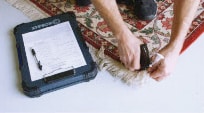
Pre-Inspection and Check In
We begin with measuring and cataloging to provide both accurate pricing and a way to track each rug throughout the cleaning process. We then thoroughly inspect the rug for fiber content, construction, dye stability and any preexisting concerns. We record this information in a detailed report with photographs. Our company will come to your home to pick up your rug, or you may drop it by our shop.


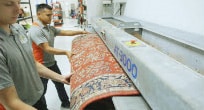
Dry Soil Removal
The vital first step to quality cleaning is dusting. Our state-of-the-art automatic rug dusting machine is specially designed to safely remove hidden embedded dust, sand and soil from the base of the face fibers. It is not unusual for a woven rug to release 2-5 lbs. of this dry material, which if not removed, can cause long term damage.
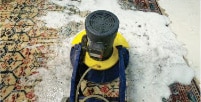
Area Rug Washing
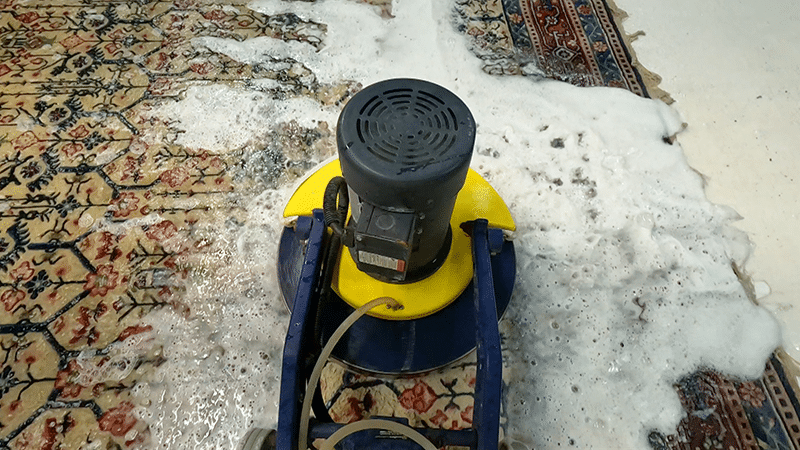
Before the wash process has started, your rug is tested for dye stability and treated accordingly with a dye stabilizer to minimize any bleeding of the dyes. The rug is now ready to be fully washed on our clean and graded wash floor. The pre-inspection determines the appropriate techniques and products to be used for effective and safe cleaning.


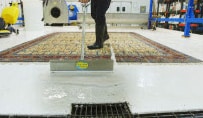
Rinse & Water Removal
Once the rug has undergone its complete wash, it is time to rinse it. Using clean water and a specially designed squeegee. Followed by running the rug through one of the most successful rug-wringers in the world! Not only provides another level of rinsing, but flushes out any extra urine and other contaminants in the rug. It removes over 90% of moisture from rugs in 3 minutes or less. When the rug emerges, it is completely rinsed and merely damp.
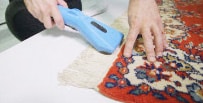
Fringe Cleaning
All fringe detail will take place in the finishing stage. Fringe will be extracted, groomed and treated accordingly.



Drying
Rug are hung to finish the drying process. They are enclosed inside our dying tower rack with powerful air movers and dehumidifiers in drying each rug quickly as possible.
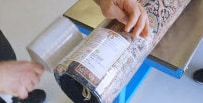
Grooming / Delivery
Once fully dried, the rug will be vacuumed and groomed. The pile will be set and it will receive a final post inspection. The rug then will be rolled, nicely wrapped and placed in our clean room to await pick-up or delivery.

Benefits of Professional Area Rug Cleaning
Whether you're on a budget or you have an abundance of free time, you may be thinking about DIY area rug cleaning in Isle of Palms, SC. While maintaining your area rugs with regular vacuuming and spot stain removal is important, a complete area rug cleaning requires specialized knowledge, tools, and training. Here are just a few of the biggest benefits of hiring a professional area rug cleaning company like Citrus Fresh:
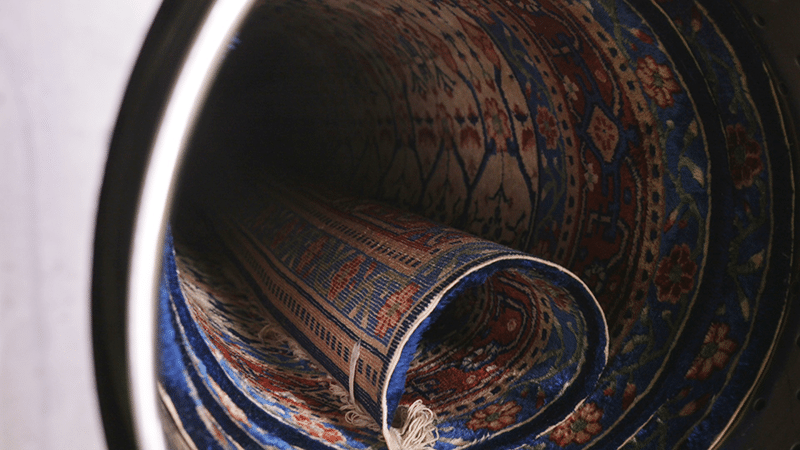
You want your rug soft to the touch
Your rug is submerged and washed with products for wool, then rinsed & spun in professional equipment!
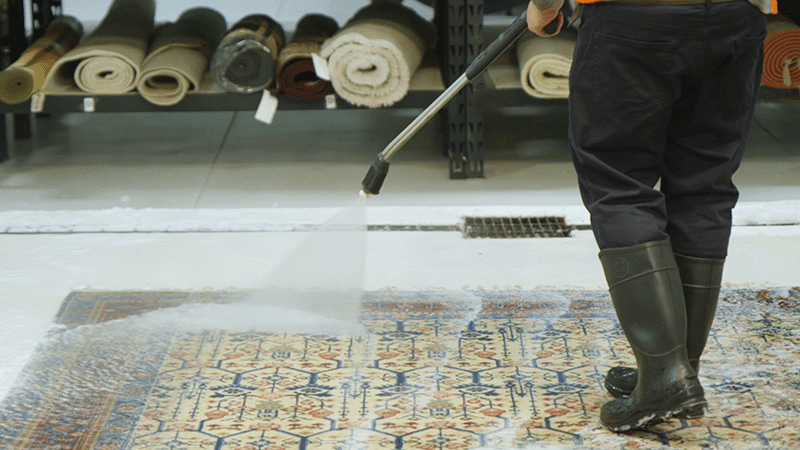
You want to see your rug colorful again
When your rug is washed correctly, you will see that pop of color that has been missing!
You want all pet accident odors removed
Your rug is submerged under water & flushed to give you Guaranteed Pet Odor Removal!
What About In-Home Area Rug Cleaning in Isle of Palms, SC?
At Citrus Fresh Carpet & Rug Cleaning, we offer several carpet cleaning services to our customers. While we're happy to come to your home to clean the synthetic carpets you walk on every day, we must take a special approach with area rugs. The bottom line is that to clean your area rug properly, we must do so in our fully-equipped cleaning facility. We can't travel to your home with the equipment needed to thoroughly clean area rugs that are wool, handmade, silk, etc.
There are many reasons why an area rug must be removed from a home or office to be properly cleaned. Here are three of the most important:
Dust
Most in-home carpet cleaning does not incorporate dusting with synthetic carpets. But with area rugs, dusting is non-negotiable. Area rugs, especially of the wool variety, can hold pounds of dust, mites, dead skin, and other yucky debris. To remove this debris, dust and soil must be removed from the foundation of your rug's fibers. To do this, heavy equipment, a clean facility, and a professional's touch are needed.
Improper Rinsing
Standard in-home carpet rinsing often involves a fiber rinse that can leave residue on high-end area rugs. This residue can lead to fading and yellowing. By bringing your area rugs to our cleaning facility, our team can rinse your area rug more thoroughly. That way, we can release trapped dirt that is trapped in the wefts and warps of your Oriental rug. We can then place your area rug in our wash pit for additional rinsing, using water to flush through your rug from back to front. We then use a specialized squeegee to remove any remaining soil remnants until the water we use runs clear out of your rug.
Knowledge
Your average in-home carpet cleaner will clean your carpet the best way they can with the information they have. As such, they may treat your area rug like it is a piece of carpet. Unfortunately, that can have disastrous effects on your prized area rug.

However, highly-trained area rug specialists have unique knowledge that in-home carpet cleaners aren't required to know. As mentioned above, they also have the specific equipment and building space needed to completely clean an area rug. The owners of Citrus Fresh Carpet & Rug Cleaning were trained to clean Oriental and area rugs by world-renowned expert Lisa Wagner, earning the title "Textile Pro Certified."

Area Rug Pads from Citrus Fresh Carpet & Rug Cleaning Services
In addition to personalized area rug cleaning in Isle of Palms, SC, we offer custom-cut area rug pads to fit your area rugs like a glove. Our rug pads act like an insurance policy for high-quality area rugs, even if they're made of materials like wool or cotton. Unlike other rug pads, however, our pads have the ability to soak up unwanted spills.
Most rug pads allow liquids to pass right through them. When this happens, the fluid is trapped between the rug pad and your floor - an incredibly damaging circumstance for your flooring and its finish. Can you imagine what a pool of red wine would do if left to fester underneath your favorite area rug? You could be looking at thousands of dollars of damage.
With rug pads from Citrus Fresh, liquids are moved away from the rug by the absorbent top layer of the padding and are held in place by the rug pad. The pad, which is designed with a moisture barrier, does not allow the spill to reach your flooring. This innovative design doesn't just protect your floors - it protects your area rug better too. As if that weren't enough, the closed-cell technology of these pads helps provide a barrier to pet urine!
We sell Rug Pads - and will custom cut to fit your rugs!
Additional benefits of area rug pads from Citrus Fresh include:
- The Eco Preferred or Eco Value is a Green Label Certified Environmentally Safe Product
- The only "GO GREEN" felt pad on the market.
- Green Label Plus Certified
- Washable
- No Latex Rubber in Eco Products
- Sustainable Eco Friendly - 100% Recycled - 100% Recyclable
- No Odors or Off gassing
- Non-Toxic & Non-Allergenic
- Will not stain, discolor, or mark flooring.
- Great for Radiant Heat since it doesn't degrade
New Closed Cell Technology (CCT) provides a pet urine barrier. Keeps most spills & pet urine from soaking through to ruin your hardwood flooring.

Your Top Choice for Area Rug Cleaning in Isle of Palms, SC
You might be wondering, "Who is the best choice for area rug cleaning near me?" One look at our reviews and video testimonials, and the clear choice is Citrus Fresh Carpet & Rug Cleaning Services.
Meticulous in its cleaning and care of fine area rugs, we're proud to provide our customers with safe, reliable, efficient services that protect and restore the appearance of your rugs. Our area rug cleaning methods are incredibly potent and have been proven to clean a wide array of unique area rugs, from the most fragile family heirlooms to sturdier modern rugs.
Good old-fashioned customer service, attention to detail, and a passion for cleaning area rugs make Citrus Fresh your first choice for service and quality. Contact our office today to learn more about our cleaning process or to schedule your area rug pickup or drop-off.
Latest News in Isle of Palms, SC
New waterfront park coming to Isle of Palms this year
Autumn Kleinhttps://www.live5news.com/2024/02/05/new-waterfront-park-coming-isle-palms-this-year/
ISLE OF PALMS, S.C. (WCSC) - The Isle of Palms City Council in 2020 voted to make additions to the marina area of the island and that project is officially slated to be completed this year.The project included the addition of a public dock, a boardwalk and a waterfront park and greenspace. The boardwalk and public dock have been completed, and, as of Jan. 11, the construction contract for the waterfront park and greenspace was officially confirmed.The waterfront park will cover the 300 by 25 foot wide area along the marina faci...
ISLE OF PALMS, S.C. (WCSC) - The Isle of Palms City Council in 2020 voted to make additions to the marina area of the island and that project is officially slated to be completed this year.
The project included the addition of a public dock, a boardwalk and a waterfront park and greenspace. The boardwalk and public dock have been completed, and, as of Jan. 11, the construction contract for the waterfront park and greenspace was officially confirmed.
The waterfront park will cover the 300 by 25 foot wide area along the marina facing the Intracoastal Waterway. There will be a 6-foot wide concrete walkway. The park will include a large lawn area with lush planting.
They plan to include a series of benches along the waterfront walkway so residents can enjoy views of the water and boating activities. There are plans for a circular seat wall near the public dock that would create an entrance to the dock area.
They plan to include a kayak storage area and a kayak launch area. There will be golf cart parking available as well as bicycle parking areas.
All of these plans did require collaboration and participation from the marina manager and restaurant tenants. Scott Toole, the general manager of the Outpost, a nearby restaurant, says he is very excited for this addition to the area.
“I think that it’s an added benefit to the island, to the residents, everybody, to have a space and to use the dock. Kayak launching is a big thing that I think people will take advantage of.” he says. “It’s really going to help make this area kind of a place of interest for people, sort of a destination so to speak, for people to be able to get some food, get some drink, watch the water and use the dock that’s right there.”
Toole says they very recently renovated the Outpost and he’s excited to see this new project bring more people to the area. He says he feels like this area of Isle of Palms is often overlooked as it is a little ways away from the main beach.
“We’ve kind of joked that it’s a small corner of the island and so, anything that’s bringing people down this direction is good for everybody. We’re excited to see this project take place,” he says.
The project is currently slated to be completed by May of this year. To provide City Council your input on this project you can click here.
Copyright 2024 WCSC. All rights reserved.
Fees at new waterfront park on Isle of Palms are being questioned by non-residents
Sophia Radebaughhttps://www.counton2.com/news/fees-at-new-waterfront-park-on-isle-of-palms-are-being-questioned-by-non-residents/
Editor’s note: The private marina operators set fees for the new park area. City of Isle of Palms does not set the fees.—ISLE OF PALMS, S.C. (WCBD) – Construction is underway on a new Isle of Palms waterfront park.It’s part of a 2020 vote by Isle of Palms city council to improve the island’s marina area.While some are excited to have a new area to spend time with their family, others are concerned about potential costs.“It’ll be nice to have something to bring the g...
Editor’s note: The private marina operators set fees for the new park area. City of Isle of Palms does not set the fees.
—
ISLE OF PALMS, S.C. (WCBD) – Construction is underway on a new Isle of Palms waterfront park.
It’s part of a 2020 vote by Isle of Palms city council to improve the island’s marina area.
While some are excited to have a new area to spend time with their family, others are concerned about potential costs.
“It’ll be nice to have something to bring the grandchildren over to and stuff like that so it’ll be nice,” said part-time resident, Dale Johns.
It’s an investment city councilmembers like Blair Hahn say was expensive but well worth it.
“The city has gone to great expense to redo the dock and we’re going to have a little green space,” Hahn said.
However, a visit to the park could cost more for non-residents. The plan is to charge visitors for parking and to launch a boat from the public dock.
The cost to park is $3.50 per foot of the trailer plus a utility fee per day.
A non-resident who wanted to stay anonymous said many people are upset about this part of the plan. “The city is granting its residents special parking privileges and charging nonresidents exorbitant fees, all while calling this a “public dock.”
Hahn says fees for accessing public parks are nothing new in Charleston.
“It’s no different than Charleston County Park. They charge $20 a car to park on the island so unfortunately, that’s just a reality,” Hahn said.
The nonresident went on to say not everyone will be able to pay the fees.
They said, “The city of Isle of Palms needs to treat residents and nonresidents the same at its “Public park” and charge everyone a fair amount, or allow free parking for everyone.”
Despite the concern, Hahn believes the park will still serve as a popular meeting spot for locals and visitors.
“We are doing everything we can to be resident-friendly and visitor-friendly and to bring people to Isle of Palms, but there’s always a cost to everything you do,” Hahn said.
The project is expected to be completed by May of this year.
Isle of Palms Is The Coastal Getaway Of The Summer
Tara Massouleh McCayhttps://www.southernliving.com/travel/south-carolina/isle-of-palms-south-carolina
Isle of Palms is just 30 minutes from Charleston and may just be the area’s best kept secret.Swaths of uninterrupted white-sand beach, the smell of salty spray, warm sun on your skin, and the rustle of palm fronds gently blowing in the wind—these are the sights, sounds, and scents of Isle of Palms. The South Carolina barrier island...
Isle of Palms is just 30 minutes from Charleston and may just be the area’s best kept secret.
Swaths of uninterrupted white-sand beach, the smell of salty spray, warm sun on your skin, and the rustle of palm fronds gently blowing in the wind—these are the sights, sounds, and scents of Isle of Palms. The South Carolina barrier island packs a lot of relaxation and big fun into a vacation destination that's just seven miles long and one mile wide. The island's proximity to Charleston (just 18 miles by car), make it a preferred summer hideout for locals. An abundance of vacation rentals and the iconic Wild Dunes resort have been drawing visitors from across the country since the early 1970s.
With the deep blue Atlantic on one side and marshy creeks of the Intracoastal Waterway on the other, Isle of Palms offers the best of the Lowcountry and the beach in one stunning setting that's begging to be added to your vacation calendar.
Beach Activities
Six of Isle of Palms' seven total miles are occupied by public beaches, which means you'll have your pick of the litter when looking for a sandy spot where you can post up for the day—or the week. Once you've staked your claim, all the normal beach activities are yours for the choosing, from splashing around in the surprisingly calm seas to building the ultimate sandcastle or playing a game of beach volleyball.
For families, the Isle of Palms County Park, located in the middle of the island's coastline, is ideal. The public beach has lifeguards, outdoor showers, chair and umbrella rentals, restrooms, and even a playground for little ones retreat to once they tire of the sun and surf.
On The Water
Make the most of a visit to Isle of Palms by scheduling a charter to take you offshore. Get your sea legs at the Isle of Palms Marina, where you can easily rent a boat and spend a day exploring the island's bays and waterways. Fishing charters are plentiful and offer both reef fishing and Gulf Stream fishing.
Consider a twilight fishing charter for the family, when sea life such as sharks are more active. Create indelible memories as your party witnesses the sunset over the Atlantic while casting a line for those fish that inhabit the bottom of the depths. Try booking through Barrier Island Fishing Charters for just the right adventure.
Wildlife Viewing
For adventure enthusiasts or wildlife lovers, Barrier Island Eco Tours hosts a range of naturalist-guided tours that take visitors through winding salt marshes, tidal creeks, and the Intracoastal Waterway on the way to uninhabited Capers Island. Animals you might see along the way include loggerhead turtles, bottlenose dolphins, and every shape and size of coastal birds.
Nets and traps are employed as your excursion unfolds for close-up viewing of some of the marine life that thrives just below the surface. When you arrive on the island, exploring the astonishing natural landscape is top priority. Take a slow walk along “Boneyard Beach,”and wander on the interior trails that provide excellent viewing of untouched ponds, vibrant with the wildlife that call this sanctuary home.
A Culinary Sweet Spot
Breakfast is noteworthy at Sea Biscuit Café. The tiny beachside shack has been dishing out delicious morning meals since 1968. While they offer all the classics, the daily specials are where the magic happens. Past offerings have included chocolate banana challah French toast, lemon lavender pancakes, and tomato pie.
When you need a mid-day refuel for the whole family, Coconut Joe's is the obvious choice. Located on Isle of Palms' main drag, you won't have to venture far to get fresh seafood and impeccable vibes. The open-air covered deck is the ideal spot for munching on the restaurant's namesake shrimp, while rocking sandy toes and sun-bleached hair. When happy hour hits, venture to the rooftop bar for a frozen cocktail or painkiller. Nothing will put you on island time faster.
By the time you're finally ready to come in from the sun and go out to dinner, Isle of Palms will be waiting with plenty of options. The Boathouse and Acme Lowcountry Kitchen are island staples that have stood the test of time thanks to excellent quality food and good old-fashioned Southern hospitality. For a special night out, try Coda del Pesce, a fine dining restaurant that specializes in Italian with lots of influence (and fresh catch) from the nearby seas.
All trips to Isle of Palms must include at least one visit to The Windjammer at Front Beach. The legendary local music venue is known for its incredible live shows, stellar views of the water, cold drinks, and unbeatable fried pickles.
Your Dream Accommodations
The obvious choice for places to stay in Isle of Palms is Wild Dunes Resort, a 1,600-acre family-friendly resort that offers everything from rooms and suites at two inns, to private beach condos and home rentals. In addition to a more-than-comfortable stay, the resort also features several resort-style pools, a spa, and two championship golf courses.
If you're hoping for a cozier stay, the newly renovated Palms Oceanfront Hotel consists of 68 modern rooms with gorgeous views of the sparkling Atlantic. There are also plenty of rentals through Airbnb and VRBO for everything from multifamily waterfront homes to one-bedroom condos.
Whether you book for a long weekend or stay for an entire week, the memories and magic of Isle of Palms will stay with you for months and years to come—maybe even until you have a chance to make another trip back!
Isle of Palms: Things to Do and See at This Coastal SC Beach
Andrea Beamhttps://kiddingaroundgreenville.com/isle-of-palms-charleston
If you are planning a family vacation to the SC coast, a stellar beach to visit is Isle of Palms. Things to do at IOP near Charleston are endless. Isle of Palms is convenient, family-friendly, and fun. You can even make a fun day trip out of it! She shares all the information that you need, including things to do, where to eat, and how much parking costs if you’re just planning a quick day trip at this local South Carolina beach. About Isle of PalmsRecently my family traveled to Charleston to ...
If you are planning a family vacation to the SC coast, a stellar beach to visit is Isle of Palms. Things to do at IOP near Charleston are endless. Isle of Palms is convenient, family-friendly, and fun. You can even make a fun day trip out of it! She shares all the information that you need, including things to do, where to eat, and how much parking costs if you’re just planning a quick day trip at this local South Carolina beach.
About Isle of Palms
Recently my family traveled to Charleston to spend the day at Isle of Palms. Yes, you read that right – we went for the day. Isle of Palms is completely doable as a day trip. It’s perfect if you’re like me and live on a budget but long to breathe in the salt air.
Let me tell you, I was so impressed. There’s a quaint beachfront road lined with restaurants and shops. The shops are your typical beach shops filled with t-shirts, trinkets, and every size/shape boogie board to hit the market. You know, the kind of shops full of souvenirs found only on the coast.
There are also plenty of unique places to eat, a wonderful and clean beach, and fun shops to explore!
Isle of Palms: Things to Do With Your Family
One of the best things to do while in town is to head to the beach. The beach at IOP is flat, and there is plenty of room, even during high tide. The boys had a great time with boogie and skimboards. You can also spend the day looking for seashells, building sandcastles, or just enjoying the sounds of the Atlantic Ocean. You can occasionally catch live music right by the dunes!
South Carolina’s crazy weather pattern has created a more hazardous environment for swimmers, so always be cautious of rip tides. In the midst of your family fun, make sure to keep an eye on the colored flag at the lifeguard stand.
Big Family Day Trip Tip: Isle of Palms County Park
If you park at Isle of Palms County Park, you’ll have restrooms, outdoor showers, and changing rooms available to you. This is a big deal when you’ll have 3 hour plus ride back home!
The beach can get pretty crowded, especially on Saturday, so plan to get there early in the day if you want a large space on the beach to set up camp. If you are in need of chair and umbrella rentals, there is a company for that! You can rent surfboards, bikes, chairs, and umbrellas from IOP Beach Chair Co. They even rent accessible beach wheelchairs.
You’ll also find rentals for chairs, umbrellas and boogie boards available at a cart by the restrooms at Isle of Palms County Park.
Bonus tip: There is a Harris Teeter across the street from Isle of Palms park. It’s a good place to stop before the beach to load up on snacks, fruit, or even some pre-made sandwiches. You’ll save some money here over restaurants and beach carts!
There’s certainly no shortage of food choices. Whether you enjoy live music and seafood, or you’re looking for some good ol’ American burgers and fries, you will find a delicious meal at Isle of Palms. One of the most popular places is Acme Lowcountry Kitchen. They have mostly seafood options and use fresh and local ingredients, which would make for a great dinner after a long day on the beach. They also have a pretty decent kids’ menu, which is always a plus.
If you are looking for something delicious right off Ocean Boulevard, then Smugglers Island Eats and Raw Bar will hit the spot. They pride themselves on a family-friendly atmosphere with a casual vibe. Smugglers, of course, offers seafood like fried shrimp baskets but also has smash burgers and vegetarian options if you want something else. Their frozen daiquiris are delicious by the way!
One of the most popular beach restaurants in IOP is Coconut Joe’s Beach Grill. They have lots of seafood dishes like crabcakes and shrimp and grits that are delicious, but they also have burgers and sandwiches. The restaurant is located by the ocean on Ocean Boulevard and offers a rooftop bar for patrons to enjoy a delicious cocktail while taking in the sunset over the Atlantic Ocean.
If you are a nature lover, then going on an ecology tour of the waterways and marshes near IOP would be a perfect addition to your trip. Barrier Island Eco Tours has public tours that are guided by a naturalist and include boat excursions, dolphin tours, an exploration of Capers Island, and more. You are certain to see lots of sealife on your excursion, and it is a wonderful way to learn more about the SC coast while also having a blast. The company offers public trips, private charters, school trips, and special events throughout the year.
Isle of Palms Beach Parking
The beachfront Isle of Palms County Park offers great parking, snack bars, restrooms, and beach access. Admission prices vary depending on the season but car prices do not exceed $15 during the week, and $20 on Saturday. If Saturday is your only option for travel, you’ll want to get an early start. The County Park lot will fill up, I promise. I’m speaking from experience.
Parking on the street is an option, but the spaces are limited on the weekends. There are electronic pay-boxes along the sidewalk, so make sure to have a card handy (it’s inexpensive). We lucked out with a spot on the street directly in front of beach access with a clean bathhouse.
Between the County Park and plenty of public beach access, you can’t go wrong with a trip to the Isle of Palms. Whether you are renting a home, having a day trip, staying at Wild Dunes Resort, or vacationing at one of the few hotels in town, you are certain to find your Isle of Palms vacation worthwhile.
Visit the Isle of Palms website for more information on where to eat, what to do, and where to stay if you need more than a day trip.
Find a Place to Stay in Isle of Palms
Use the map below to find the perfect place to stay in Isle of Palms. Kidding Around earns when you book through these links through an affiliate relationship with Stay 22.
What’s your favorite thing to do when visiting the Isle of Palms?
Are you a beach lover?
Check out our list of the 20 Best Beaches in the Southeast!
Charleston Beach Foundation asks Isle of Palms, SCDOT to revoke parking plan
Caitlin Ashbaughhttps://www.live5news.com/2023/11/28/charleston-beach-foundation-asks-isle-palms-scdot-revoke-parking-plan/
ISLE OF PALMS, S.C. (WCSC) - The Charleston Beach Foundation is asking the city of Isle of Palms and South Carolina Department of Transportation to revoke current parking plans along beach access points.The group disclosed its concerns in a letter on November 27, claiming the “general public is being denied their constitutional guaranty of equality and privilege.”Isle of Palms City Council put the regulations into place in 2015 with the goal of making the beaches functional and safe.The 2015 parking plan, ame...
ISLE OF PALMS, S.C. (WCSC) - The Charleston Beach Foundation is asking the city of Isle of Palms and South Carolina Department of Transportation to revoke current parking plans along beach access points.
The group disclosed its concerns in a letter on November 27, claiming the “general public is being denied their constitutional guaranty of equality and privilege.”
Isle of Palms City Council put the regulations into place in 2015 with the goal of making the beaches functional and safe.
The 2015 parking plan, amended in 2017, cost $250,000 in taxpayer dollars and is modeled off similar plans in both Charleston and Columbia.
The city claims the plan was made to manage “unbridled growth” in the region, both nearby in Charleston and further out in the Lowcountry.
Activists say it does not match up with the increase in commercial use of the island or overall population growth.
“Revoke the 2015 parking plan on Isle of Palms, return all residential-only parking spaces on both Sullivans Island and Isle of Palms back to the general public,” Michael Barnett says.
Barnett says the plan eliminated a number of free spots and instead gave them to short-term rentals in nearby neighborhoods.
The Charleston Beach Foundation also claims the area has since become a hot spot for commercial use, with the city voting in a referendum on Nov. 7 to not limit short-term rental licenses.
“They were really the first to do it. They started to do it piece by piece, which really got my attention because I was a surfer,” Barnett says. “Businesses are operating in these areas. Not basically, they are. They’re not residential neighborhoods anymore.”
City officials weighed in on the matter.
“We are very much a residential community. Certainly, in season, we have a lot more visitors than we do residents. But we provide eight times the among of parking required by the state,” Isle of Palms Mayor Phillip Pounds says.
Pounds says the island offers an abundance of free parking with the current plan, scattered around 56 beach access points.
“It’s not about increasing revenues, being punitive. It’s about making sure every spaces available can be used properly.”
The foundation mentioned encroachment and “excessive fines” as to why the plan should be reworked.
“Why would a parking ticket for parking in a residential area, or having your tires on the road, be 3x the state average on Isle of Palms?” Barnett says.
Pounds says the plan is set in place for now.
“We can’t do anything without approval and oversight, and we have a really good relationship with SCDOT. If there were any changes we were looking to make, we’d certainly have to work in conjunction with them,” Pounds says.
The SCDOT and Isle of Palms City Council both say they are starting the initial review process for the Charleston Beach Foundation’s request.
Copyright 2023 WCSC. All rights reserved.
Disclaimer: